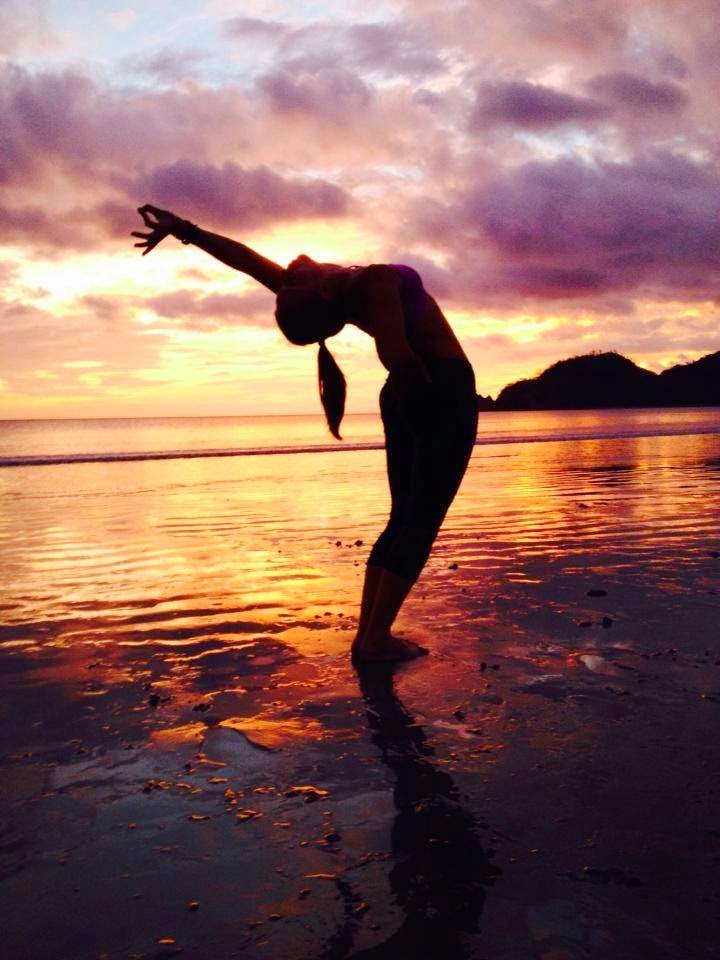
I Am Not a Foreigner, Because We Are All Traveling

"I am not a foreigner, because we are all traveling. We are all full of the
same questions, the same tiredness, the same fears, the same selfishness, and
the same generosity. I am not a foreigner, because, when I asked, I received.
When I knocked, the door opened. When I looked, I found."
-Paulo Coelho

I'm laying in my own bed in Swansea, Illinois. This is it. I'm back in the United States for more than a few weeks. This is the first time in 15 months I can say this. From the Middle East to Europe to Central America, I have learned and experienced and changed drastically. I have learned to do without. I have met strangers I will never see again who showed me unmeasurable kindness. I have been robbed, more than once. I have spoken another language. I have communicated without language. I have forged cross-cultural friendships. I have learned. I have taught. I have had many questions answered. I have many questions left unanswered, but have learned that there is strength and wisdom to be found in accepting that the questions themselves are just as important as answers. I have meditated sitting on a rock in the ocean. I have howled at the full moon with people I love. I have cried. I have laughed. I have grown exponentially. I could go on and on.
Two of the most important lessons I have learned are this: the universe is unfolding exactly as it will. Live each day to the fullest, without worry. The only thing we can change is our reactions to circumstance. We have the power to choose happiness. And I have learned that underneath language, upbringing, culture, and age, we are all just human beings. We are all traveling on our own individual journeys through life. I have been blessed to meet so many beautiful souls on my journey who have influenced me in beautiful, incredible ways. Thank you. Thank you all.
Tomorrow when I wake up, I will start the next chapter of my life. I cannot wait to see what adventures and experiences await me next.

- Emma Donovan

The Will To Succeed

with shovel
Occasionally you meet someone who has the faith and determination to succeed, even against odds. A former student of mine shared this will to succeed with me and I still remain inspired by him.
Ramon Cuevas comes from a humble background in northern Nicaragua and
“…was raised in a very poor, but strong family full of values that taught
me how to be part of society in order to set the example wherever I went, and
to show respect to everybody, regardless their economic position.” He
emigrated to the US to achieve part of his goals. He enrolled in the U.S.
Army, improved his English, trained and was deployed to Iraq 3 times.
His unwavering faith was a great part of his success. “I was sent on
missions many times…I experienced how great God and Jesus Christ were in
keeping me alive and protecting me at all times. Being from such a small town
in Nicaragua, it makes me really proud that I was part of one of the greatest
armed forces in the world.”
He knew that gaining an education was something that could lift him and his
family up from their humble backgrounds. “…anything can be done if you
just have faith and focus on your objective—an objective that you know that
in the end is going to return on something good, something that will benefit
your life, something that nobody can take away from you. That something for me
was education.”
in truckAfter finishing his contract, he returned to Nicaragua to support his mother
and grandmother. During his military years, he had promised to return and take
care of his ailing grandmother and was able to be with her for her last 3
months of life.
In 2010, he enrolled at UAM – CUSE (Universidad Americana – College of
University Studies in English) in Managua, thanks to the US GI Bill, where he
was able to “…finally fulfill one of the things I had fought for: my
education. Ever since I started my degree, I have always tried to maintain my
focus on being better every day and setting a good example for others.”
“I always thank Jesus Christ and the U.S. Army for helping me achieve my
dream.” After 4 years, he now has a degree in Global Business and works at
the US Embassy in Managua.
- Mary Helen Espinosa

Miskito Keys

"The past two days I spent in the Miskito Keys were some of the best days of my life. The natural beauty was astounding. I spent the time hand fishing, swimming through thriving coral reefs and exploring a mangrove, swimming in the aqua blue water and lounging in a hammock. I really, really want to go back already!"
- Emma Donovan

Kindred Spirit

Well here it is almost the end of my first semester in Nicaragua. Amongst all the stress of writing papers and studying for finals there is one experience that I did not account for, saying goodbye to great friends. If someone would have told me three months ago that I was going to make some of the best friends I have ever had in such a short period of time I would have said they were crazy! But, here I am saying goodbye to amazing people who I could not imagine my experience in Nicaragua without. I cannot seem to find a reason for these rapid “friends”. My only theory is perhaps while experiencing study abroad you naturally meet people that have the same qualities that made you take the leap and study in a far away place. Maybe it is because the other students you meet are also adventurous, curious, and friendly people. Whatever it is, it is a wild ride that will leave you with a few extra amazing people in your life.

kindred spirit
noun
1. a person whose interests or attitudes are similar to one’s own.

-James Nash

Life Is A Beautiful Struggle


It seems like not that long ago that I first arrived in Managua, and maybe on one hand it was only 3 months ago, but in that amount of time I have stories that could fill up way more than any 3 months I would have spent at school in Arkansas. I cannot perfect the experiences I have had into writing, but I will try because what I have learned is not solely my own. I do not know too many people my age who understand the significance of circumstances and series of events that come to make who they think they are actually who they have become. Living away from home has given me the freedom to choose who I want to be. Of course I have the backbone of the most amazing family and friends I could be graced with, but they are all people I had to be away from at one point or another to know how much I appreciate them. So, my circumstances led me to adventure far away to the land of lakes and volcanoes in Nicaragua.
- Gracie Bronson 

2 Months Anniversary

image


I was gone for four days traveling around the North of Nicaragua, and came back to my house where I spent the evening showing my parents pictures of people in my life at home. They then shared photos of their families and stories about their past. I gave my mom a hug on her birthday, but tonight she kissed me on the cheek before she went to sleep. My dad kisses me softly on the head most days when I am sitting at the table eating breakfast, but tonight he also kissed me on the cheek. They adopted me 2 months ago into their home, with no knowledge of who I was or what I was like. Now, 2 months later, with 2 more to go, I feel welcomed and apart of a home away from home. 
-Gracie Bronson

A Brief Thought

After living in Nicaragua for just a short time my perspective of my field (Latin American/Environmental History) has changed dramatically. I am almost embarrassed to say that I have written about Latin America before I had the chance to live here and learn about the culture. For example, I reviewed a book that had a lot to say about Simon Bolivar and how he is viewed in Latin America today. The notion that one could lump Latin America in to one category and speak on their views as a whole is just silly. If you ask ten people in Nicaragua what they think about Bolivar you will get ten very different answers and that is just one country in the massive region we call Latin America. Throughout history there have been many people with very different experiences in Latin America. Does this mean we should dissolve all Latin American History departments? No, of course not but we should try to stop generalizing a very diverse region.
- James Nash

Amazing Nicaragua

       While on exchange at La UAM (Universidad Americana), I am living in Managua. People describe Managua as hot and unorganized, but what many fail to realize is that the city is the perfect home-base for the weekend traveler. There are so many amazing places to go that are close and affordable to get to from Managua. The country never fails to amaze me with its beauty and diversity when I travel outside of the city. Recently I took a trip to Selva Negra, a stunning cloud forest reserve and coffee plantation only two hours by bus (75 cordobas/ 3 USD) north of Managua. The reserve was great, I spent the whole weekend hiking, relaxing, and drinking some of the best coffee I’ve had. The best part of the whole trip was the weather! It was actually cool and breezy the whole time I was there. I woke up cold a couple mornings, something that is much needed while living in Managua. While drinking coffee I also had the great fortune of meeting Mr. Eddy, the resident author, historian, and protector of local culture. We had the most interesting conversation about the history of coffee, tobacco, and Nicaragua in general. I had to really convince myself to leave the reserve, it was absolutely amazing in every way.

ImageImageImageImage
- James Nash

Esteli: Cigars, Murals, and Nightlife

This past weekend I headed north to Esteli for a weekend of preliminary research. Esteli is a tobacco producing region in Nicaragua’s northern highlands. I was there to research tobacco but found so much more. After finishing some work I walked around the city to get my bearings. The city felt strangely familiar, I think it reminded me of a city back home. The central park and church were exactly what I came to expect from Nicaragua, stunning.
Image
After touring the city I returned to my hotel which is owned by a group of partners in the cigar business. There is a humidor in the lobby so I was able to buy and test some fine cigars on site which was convenient.  Image
Image
Finally I took Sunday document the amazing murals that dot the city. I couldn’t believe the amount and quality of the murals in Esteli.
ImageImageImage
After a self tour of the art I retired back to my hotel and watched the World Series game with the very friendly bartender. After the game I was given a tour of the local nightlife by the hotel bartender, it was a blast. Esteli is a great town filled with kind people, I can not wait to go back.
- James Nash

A Little Advice

As a graduate student studying abroad I think I have had a very different experience than I would have as an undergraduate. Study abroad for nontraditional students is just not that common, especially at my school. I have to say that there were a lot of unknowns before I left. Even after I arrived there were days in which I was not sure that a year abroad as a graduate student was the best idea. I am happy that I decided to go through with my studies here in Nicaragua, my experiences are giving me new perspectives on my field every day. For the rest of this post I would like to give future graduate students thinking of study abroad some advice.
First and most importantly, make sure your work abroad will be beneficial to your program at home. It can be especially hard for graduate students to get credit for all the courses they want to take abroad. In my case, I am only receiving credit from my home institution for half of my courses but I am receiving a postgrad certificate in my field from my host institution. Second, do not think because you are a more mature student that you will not experience home sickness and culture shock. Home sickness and culture shock happen to all of us and both get better once you make friends and find people you can talk to about these things. Also do not be afraid to reach out to your fellow international students, even if they are undergraduates. You are all in the same situation more or less and they will be more helpful than you may realize. Lastly do not lose sight of why you are studying abroad, if it is to supplement your research then start working on it right away but do not forget to have a social life just as at home. Studying abroad is one of the best ways to compliment your graduate education. Have fun exploring another country and make yourself more employable while you are at it! It is worth it.    
- James Nash

Exploring Big Ideas Via Tiny Country


“What did you do over the summer?” I grin from ear to ear when I hear that question.
“Oh, you know. I hiked up an active volcano, watched sea turtles nest and scuba dived in one of the most biologically isolated crater lakes in the world. No big deal.” And then I waited for the open-mouthed stare.
This summer I was presented with a unique opportunity to participate in the ISEP-sponsored Green Adventure Program at the Universidad Americana in Managua, Nicaragua. For three weeks, my two classmates, my professor and myself traveled around the country exploring the culture, geography and the various ways in which they affect and build the environment. Over the whirlwind tour, I saw sights that included various examples of natural resource management including two protected crater lakes, a sustainable wind farm, a soap stone quarry and the largest freshwater island in the world. All of the sites provided fascinating cultural, social, political and environmental insights into sustainability that (albeit, unpredictably) intertwined to create a not only thought provoking, but also a life changing, experience.
I particularly enjoyed visiting Laguna de Apoyo, a breathtakingly beautiful crater lake formed by a massive volcanic eruption thousands of years ago. It is considered an ecological treasure of Nicaragua, and its protection is taken seriously. It is currently under submission to become a World Heritage Site because of its incredibly diverse and ancient fish population. The surrounding community’s dedication to environmental awareness, especially among its younger residents, is an inspiring example of what collective collaboration can do for sustainable practices worldwide.
Ometepe, the world’s largest freshwater island, was another of my favorite sites. A nine and a half hour hike to the summit of one of two active volcanoes on the island was both rigorous and rewarding. Upon reaching the top, one realizes how admirable the natural world truly is and how intricate its relationships are. We, as I learned, have not just a moral, but also an ecological obligation to protect those relationships
Unfortunately, I cannot begin to describe all that I learned during the excursion—a fact due the sad truth that there are some things words and pictures simply cannot accurately depict. How can one fully recount the smiles on the faces of artisans, so eager to show off their life’s work, or the children chattering away in Spanish and English in the same breath? I long to be able to describe the horror and wonder of peering into an active volcano, the awe of watching thousands of bats whizzing passed my ears, or the gentle fluttering of mariposas (much more elegant sounding than butterflies). But the truth is, I cannot. This is my best attempt to capture my experience, though I know it is in fact a sorry substitute for the real thing.
What I took away most from Nicaragua was the attitude with which it approaches everything—with heart and care, but careful to never take anything too seriously. A country of contradictions, you are just as likely to see a parade of cattle wandering down a street as you are a pedestrian with an iPhone. They are both ingenious and incorrigible. They may not have running water or reliable electricity, but they will have satellite television and will always be cleanly dressed. Their “Nica-logic” will have you shaking your head with frustration until you throw up your hands and give into it, laughing all the way
“So,” I grin again, “how was your summer?”
- Emily Guillaume

Hot Like Fire


An ISEP student from California lives across the street from me, and we travel most days to school together. We live the farthest away from the university, which means about a 10 minute walk through our neighborhood and through a shopping mall and hotel area. If the bus comes in a timely manner, the ride is about 15 minutes, but there is no schedule or route or map to know where the stops are or when it will come, so we never know. A man who works for my host mom showed me how to take the bus to the school the first day I got here, otherwise I would be even more confused. From where we get off of the bus, it is another 5-10 minute walk to the university. The bus costs C$2.50. That is approximately 10 cents, because the exchange of the Cordoba changes frequently. The journey is not relaxing or straightforward, but it gives me the experience to squeeze in a cramped, incredibly hot bus with Nicaraguans, as they do everyday. I did not come to a developing country to have a driver and a red carpet laid down. Instead I walk over sewers, next to women cooking street food, by men making kissing noises, and around dogs eating trash. It make me feel a little more comfortable, although the amount I sweat on the other hand, is not so much. 

- Gracie Bronson

Mi Madre Nicaraguense


Señora Teresa is awake every morning by at least 6am, although I have not been up that early yet, bustling around making desayuno, and other food for the rest of the day. Dona Fatima is her elderly maid, who has been in the family for a while, but looks damn good for her age, and comes over every morning to help cook, clean the house, and do laundry. I open my door when I wake up and say “Buenas Dias,” and am automatically served breakfast of fresh fruit and juego, café, and one of many options like eggs and ham, pancakes (some of the best I have ever tasted), Nicaraguan toast, beans, bread and jelly. Teresa cooks much of the day, watches some TV, gets up to serve and play with her granddaughters who are 5 and 2 years old and come over everyday until her son comes and gets them, goes to the market, and lord knows what else. She puts everyone in her family first. I have seen her eat a meal once, but she says she snacks all day when I ask if she has eaten yet. She speaks fast Spanish, and does not know any English, but is very patient and humored by my efforts to communicate. It is my favorite part of the day when I come back from school and get to talk to her. She has prepared food for my dinner already, although most times I just want to tell her to relax and let me cook for myself. She makes me feel welcomed and cared for, and is an amazing woman all together. 

- Gracie Bronson

Studying Abroad Is Not For Everyone


Studying abroad is not for everyone. You have to have a mindset that allows you to be open and the ability to overcome vast differences in a short amount of time. Furthermore, living in a developing country, regardless of the economic class you come from, is a shock. Managua is a city that only operates on chaos and speed. Everyone is always moving, sweating, and hustling. Women are on the street selling bags of water that you bit the end off of, but who knows where the water comes from. There are carts with portable grills that send smoke into the air to contribute to the strong smell of exhaust. A taxi driver honks at you every five steps. Men turn all the way around on their motorcycles to get a better view of the gringa. Trash liters the streets where there are no traffic rules or police. Sweat drips off you like water. For me, studying here is not about what I do in the classroom. It is living in a place where nothing feels like the comfort of my life before. It is learning and evolving. Thats traveling, but it is not for everyone. It is for me, though.

- Gracie Bronson

Less than a Stranger


Starting school at Universidad Americana de Managua is like starting freshman year all over again. I do not have a full schedule, I do not know where my classes are, I do not have any books and only brought two pens with me, and I do not know anyone except the other nine ISEP exchange students. I am speaking English to the few people I know, which I do not want to do, but I do not know how to communicate well enough in Spanish, and honestly, I barely feel like I can communicate in English. The pit of my stomach still feels like it has tight knots in it. I am not nervous. Those knots are there because I do not know how else to feel about this surreal experience. I have been going back and forth between Spanish and English, I am exhausted after my wearing summer and time change, and I have to go to a new school somewhere totally different than my own. I am so excited, but overwhelmed. I did not have any time to prepare for this adventure, mentally. I seem to figure many things out though…usually. 

- Gracie Bronson

High, Low, Far and Wide~ A Hidden Outdoor Wonderland

One of the reasons I initially chose to study abroad in Nicaragua was the plethora of outdoor activities available and what seemed to me a wilderness much less open and accessible to the average traveler. We worked hard to get to many of the beautiful sights that Nicaragua provided, but each time we were rewarded with pristine forests, beautiful landscapes and a deep sense of accomplishment. Here's a snapshot of several places we visited, hiked, and swam along. The pictures never do it justice, but hopefully there are a few that will make you want to visit ASAP~

Las Isletas de Granada-


During the weekend that my roommate's family came to visit, we toured a set of islands in Lake Nicaragua that were created during one of the explosions of the nearby Volcan Mombacho. The volcano towers over the city, so it's easy to see how long ago, some blasts of lava found their way into the lake and solidified into a chain of islands with a tropical and wild feel. Many of the islands are inhabited and more than a few now have beautiful vacation homes of both wealthy locals and international investors. 
To get to the islands, we hired a guide on shore and then rode a panga through the charming channels and around the unique homes. "Guide" is always a loose term, but we had a great time with our island resident and his boat captain friend, who seemed to know enough to answer a few of our questions and was more than willing to share secrets and fun facts once we convinced him we really could understand Spanish. The islands house a community of their own including a school and a few hostels, but nearly all supplies have to be brought over from Granada, including water. 
Volcan Mombacho- Maker of Islands
Monkey Island
Vacation Home
Local Home
Cemetery Island 


Volcan Mombacho-

Our Half Way Stop
View from the Top
After spending an afternoon under the shadow of the volcano, we woke up early the next morning to conquer the beast of a hike. To be fair, while I was aware that most people opted to take a truck to the top and just hike around the craters, I was unaware that the reasoning behind it was the deathly incline and lack of trails except for the long, paved road used by said trucks. Luckily, I was with friends that were willing to follow my crazy lead, and after many hours of fighting our way to the top, we felt incredibly accomplished and more than a little dumb. But the view was amazing and we were more in tune with our jungle warrior spirits than ever. We also managed to hitch a ride down part of the way down with the rest of our crew (my roommate and family) who were smart enough to book a tour. 


Chocoyero-El Brujo-

Through our Spanish class, we had the opportunity to visit a few sites outside of Managua, including a beautiful nature preserve with ancient trees, a life-giving waterfall and some unique creatures. Our guide provided a long introduction to all of the local wildlife before leading us through several of the trails. 
El Chocoyero Tree
The site was named after a local legend about a man who was given permission to bathe in the waterfall by a wizard, under the condition that he not tell anyone else the secret location. However, on his was out, Chocoyero spilled the beans and is now forever immortalized (in the nude) as a tree alongside one of the trails. 
Along the way, we saw giant guayabon and ceiba trees, supposedly hundreds of years old. The cliff next to the waterfall is filled with hundreds of nests, home to the 'chocoyeros' (parakeets) that dive in and out around the waterfall all day. In the welcome center, one of the display boards was titled "Donde el bosque se transforma en Catedral." As an outdoor adventurer, this concept is a key reason why I so enjoy wandering through the woods and hiking in the wilderness. This panel compared the forest to a cathedral, which not only has intense symbolic meaning in the Central American region, but also related to the part of my that finds it easier to worship God when surrounded by His creation than within the walls of a church. 


Cañon de Somoto-

This canyon is located in northern Nicaragua outside of the small town of Somoto. This region of Nicaragua is very poor and we were surprised by the large number of signs we saw for NGO's and aid projects around the area. We passed through  on our journey north to El Salvador, and while the $13 tour seemed a little pricey, it was well worth the cool dip and gorgeous tunnels carved into the cliffs. Our guide was a 17-yr-old local, Josue, who led his first group when he was just six years old. We climbed, floated and jumped our way through the canyon, then ended with a beautiful hike through the Nicaraguan countryside. 


Selva Negra-

Selva Negra is a beautiful cloud forest located on a the land of a German family that has lived in the region for generations. Our journey there took us back to Matagalpa, the central coffee region of Nicaragua, and to our first hot shower in well... all of Nicaragua. Once we arrived at the actual nature preserve, we wandered the grounds of the farm and ecolodge area, and then started on our trek through the cloud forest. One of my favorite parts was a beautiful church tucked into the base of the mountain that was open air and shrouded in green. The funky plants and trees kept us entertained as we wandered up and down the hills of the reserve, up the Atajo trail and down El Fuente de Juventud (The Fountain of Youth.) Four hours later, we were overjoyed to be greeted with delicious treats and fresh coffee back at the lodge. 

My Adventurous Companions
The Model of the German Style A-Frame Lodge    


-Maggie Frazier

A Little Evaluation

The truth is, I had a such an amazing last month while studying abroad that I hardly had time to stop and sort through all the new sights, experiences and adventures, let alone to get them written down to be shared and experienced by others. I am "home" in Laramie, WY and have had a relaxing, although difficult adjustment period in the last few weeks. In light of these things, I still plan to write a few posts about the natural wonders of Nicaragua and my time in El Salvador and Costa Rica. However, as I was filling out my ISEP evaluation form, I realized that many of the questions provided a good overview of my experience abroad and may be of interest or at least provide a glimpse into some highlights of my semester. So while copy and paste may be cheating in blog world, here are some fun facts about my time abroad.

What did you think about your housing and the living experience?
I LOVED my homestay experience and would always recommend this style of living accommodation as a way to engaged with the host culture and experience an environment apart from school, play and travel. I did not feel that our food and transportation stipend was sufficient, but we learned to work around that anyway. I felt very safe and comfortable as my roommate and I were placed in an upper-class community, but feel that I may have experience more of the culture and Nicaraguan lifestyle had we been living in a more centralized neighborhood or with a middle class family.

Tell us about your experience interning/working abroad:
What skills are you learning/using that you find most valuable? 
Is there a particular experience you want to share?
I did not intern, but I did volunteer at a primary school teaching English once a week. It was a very educational experience and I feel I was exposed to many of the educational and societal barriers that keep kids from attaining higher levels of education as well as better lifestyles in Nicaragua. I learned how to make lesson plans that are culturally appropriate (ex. how to teach careers in a country with high unemployment) and in my volunteering with non-profits, I learned a lot about the on-ground barriers to providing for people needs including unexpected natural disasters, societal views on gender and authority, cultural parenting norms and political barriers for both organizations and residents receiving aid.

Tell us your FAVORITE:
1. Aspect of the university/campus
2. Place to visit or thing to do
3. Characteristic about the culture
1. I loved the small classes and our host coordinators and support staff. I felt very comfortable coming to them with any question or concern and also appreciated their efforts to include us in campus activities and events.
2. Isla de Ometepe- beautiful tropical volcanic island in the middle of Lake Nicaragua. What more can I say?
3. I love that Nicaraguan culture accepts things as they come and doesn't rush through the fun and exciting things in search of what the future holds. While waiting for EVERYTHING can be trying, eventually it was nice to settle into the "tranquilo" culture and understand that many things are out of your control, especially with the lack of infrastructure and easy communication (let alone street addresses). I loved being able to wake up in the morning and decide to go the the beach, a volcano or a colonial city and know that people would be willing to help me get there. Some of the most lively conversations I had were with taxi drivers or people on the bus, and they were always will to share their insights on the country and culture or give suggestions of where to visit and what to do.

Go CUSE! A shot of our Volleyball Tournament 
What was the most valuable thing you learned or experienced while studying abroad?
I'm not sure this is a fair question.... A few valuable things I learned were:
1.  When you are anxious, scared, frustrated or worried, breath and wait five minutes. Chances are you'll learn something that will give clarity to the situation or show you what to do next. 
2. While being accepting of another culture is important and key to any study abroad experience, there are some things that you can decide are right or wrong and that can motivate you to make a positive change in your community and the world. 
3. Learning a language is HARD. I mean really, really hard. I have so much more understanding for non-native speakers in my own culture and applaud anyone who chooses to live or work somewhere where they must use their second language more than their first. I feel much more able to relate to non-native speakers and more willing take the time to listen and engage with them whenever the opportunity allows. 
4. It's a big world out there. Don't assume you can understand it all in a semester, but don't forget how much you can learn in a short amount of time when you keep your ears and eyes open. 

Tell us what you thought about the academics at your host institution:
1. How were they similar or different? 2. Did one professor stand out? 3. Did you have a favorite course?
1. The standard of education in Nicaragua is significantly lower than that of the United States. In light of that, the academic part of my experience was not particularly challenging, other than the fact that it was in a foreign language. I did appreciate the amount of writing and reading required because I was trying to enhance each aspects of my knowledge of the foreign language and felt challenged to read and write above my initial level of competency. I was also very surprised by the classroom environment at my host university which was much less formal than those I was used to. It was very acceptable to shout out questions in class, talk with your neighbor, answer a phone call or walk in and out of the room at one's leisure. I very much enjoyed a new perspective on history and international issues, as well as an outside opinion of my own country's policies and global impact.  
Post-Volcano Boarding

3. The teacher that stood out in my experience was my Intro to International Relations professor. She was very helpful and patient with me as I struggled through the new language, but also had a unique way of helping students understand the phases of international relations throughout history, engage in what effects those processes have on our society today, as well as asking for student input and opinion on societal, moral and global impacts of international relations.
4. My favorite course was one in which I was not actually registered, nor did I attend classes. I was fortunate to take part in most of the excursions of the Earth Science and Geology classes at my host university and therefore saw many of Nicaragua's natural treasure and learned about the ecosystem, wildlife and formation of the country from an ecological standpoint while never having to actually write a paper or take a test. 

If you were trying to encourage someone to study abroad at the location where you did, what would you say to convince them?
Nicaragua is the hidden beauty of  Central America. You can never be more than three hours from a beach, there is every sort of outdoor activity and landscape that you can imagine and people are friendly and helpful, even if they never stop staring or laughing at your Spanish. It's also cheap. If you want a place where you can go and see everything, without feeling limited by your bank account, this is the place. Going to school in the capital city of Managua also provided us access to every other part of the country AND to international buses that passed through on their way Costa Rica, Honduras or El Salvador. This is also a great place to learn Spanish because you are forced to use the language on a daily basis and have less access to English compared to other Central American countries (specifically, Costa Rica.) Nicaragua also gives a real-life portrayal of an underdeveloped country and the political, social and economic barriers to development and success in a globalized world. You will have many opportunities to challenge your own ideas of what is "normal" and open yourself to the benefits and hardships of cultures and value systems. 

So if anyone needs a tour guide for Nicaragua, sign me up! I feel incredibly blessed to have had such amazing experiences and meet so many different and wonderful people. I can't to see how many ways my time abroad affects my present and my future!
- Maggie Frazier

The Need to Know: Suggestions for Studying Abroad in Nicaragua

Before you come:


·         DO research Nicaragua before you come. Although much of what you find will be fear mongering safety warnings or naive blogs praising the country’s beaches, it is good to come in with a basic knowledge of what to expect. Fun Facts like 24 Cordobas = $1 US dollar are useful to know.

·         DON’T fret about your visa. When you arrive in the country, you will purchase a 90 day tourist visa for $12 dollars at the airport or border crossing. You don’t need to apply ahead of time. After 90 days you will need to renew by either leaving the country to Costa Rica or by going to the Immigration office in Metrocentro. Beware: Nicaragua, Honduras, El Salvador, and Guatemala have a separate travel agreement, making it easy to pass from one to the other; however, leaving to any of these countries and returning does NOT renew your visa.

·         DO look at your options for the malaria vaccine. Many see that anti-malarial drugs are recommended and get the vaccine no questions asked, but do talk to your doctor. I did not get the vaccine and have had no problems. And actually, some students have more problems with the vaccine than they have with actual malaria.

·         DON’T buy an expensive international phone. Universidad Americana (UAM) will provide a basic pay-as-you-go phone. (Prepare to re-acquaint yourself with ABC and T-9 texting; it was one of the more difficult adjustments). The phone only works in Nicaragua so plan on using Skype, Facebook, and email to communicate back home.

·         DON’T bring anything you are particularly attached to. Sweat, dirt, and grime will accumulate in your clothing, street wear will destroy your shoes, and traveling will result in lost, damaged, and stolen items. My graveyard includes 3 pairs of sunglasses, 1 watch, 6 T-shirts, 2 pants, and 2 pairs of shoes- I wish I were kidding. 

Upon arrival:


·         DON’T be frightened. Many people, including your host family and Nica friends, will tell you things are unsafe- The bus is dangerous, taxis are dangerous, walking is dangerous, everything is dangerous. However, in reality, Nicaragua is the safest country in Central America and its quite safe if you are smart. 

·         DO be smart. It’s necessary to use common sense everywhere in the world.  Be logical, don’t walk alone at night, know your surrounding, don’t flash valuable objects in crowded areas. Be smart and you’ll be okay. 

·         DO relish in things from home. Yes, cultural immersion is important but every once in awhile, watch a movie in English or eat Oreos. It’s good for your sanity and will help you put into perspective the things you appreciate from home.

·         DON’T compare yourself or your experience to anyone else’s. It’s easy to look at another international student’s spanish and feel inadequate but don’t. Your experience is entirely your own, not better nor worse than anyone else’s. 

·         DO ask the locals. In a country where street names and bus schedules don’t exist, the locals will be your best bet if you are lost or unsure. Do trust them, but always with a grain of salt.

·         DO laugh. Adjusting to life in a new country is difficult- you will fumble your spanish, you will stand out like a sore thumb, and you will get frustrated with cultural things. In these instances, laugh or you will cry. For example, Nica Time dictates that everyone is 30- 60 minutes late for everything. So when you’re sitting outside in your dress, waiting for your ride to go to the club, laugh when they call saying it will be another 30 minutes.

·         DO take a deep breath and know that everything will be okay. In the beginning, everything is difficult- Nica Spanish will seem impossible to learn, the heat will be suffocating, and even texting on your T-9 phone will be a challenge. Take a deep breath and know that things will get better. You will make friends. Your host family will adopt you as their own. Your spanish will improve. I don’t know if you’ll ever really adjust to the heat, but you’ll learn ways to escape it (like the movie theater). You will adjust and just breathe deep until you do. 

- Anna  Kroos